
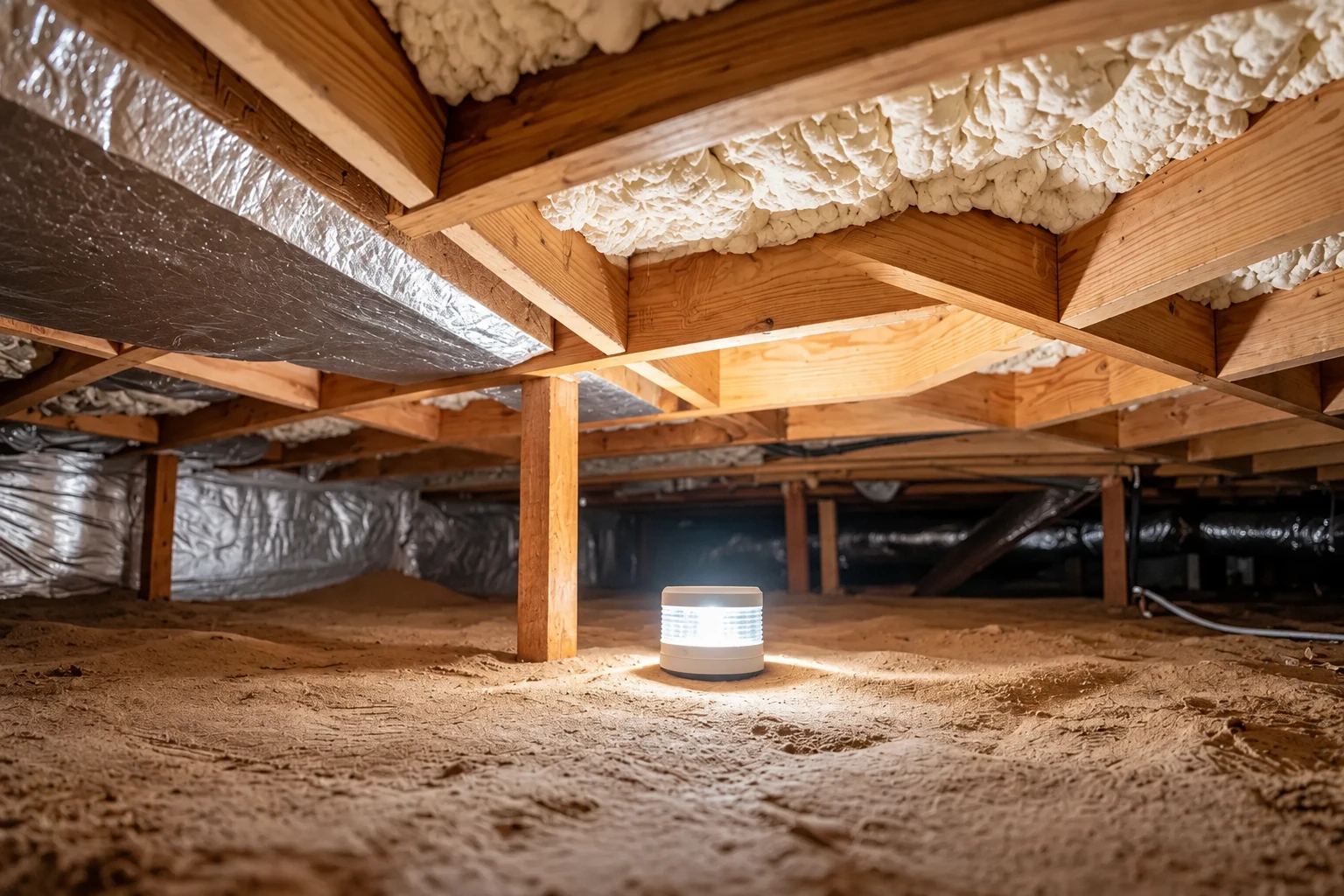
Home insulation in South Gate CA - gaps sealed first so rooms hold their temperature
Hot upstairs, cold floors or a power bill that keeps climbing? We seal the gaps, then insulate, so your house stays comfortable.
Have us look at your attic
We pick up seven days a week, from early morning into the evening, at (213) 329-0381.
What does it take to insulate a house in South Gate?
Home insulation in South Gate, CA means putting insulating material in your attic, walls or floors so the house holds its temperature and lets less noise through, and on most homes the job starts with sealing the gaps.
Most people call us because upstairs is hot by afternoon, the floors are cold in winter or the power bill keeps going up, and the fix usually lives in the attic or the crawl space. The price moves with the size of the house, how easy the attic is to get into, how many inches are already up there and what shape they're in, and which method fits your house. The schedule mostly turns on what I find once the hatch is open and whether an electrician or HVAC tech has to finish first, and your estimate puts your own house's number on all of it. If drafts are the main problem, air sealing on its own may be the right place to start, and I'll tell you if that's the case.
Why South Gate homeowners call C&K South Gate Insulation Services
I come out to every job
I look at your attic and crawl space myself, then work alongside our crew on the job. The person who explained what's up there is the one making sure it gets done that way.
Learned the trade around South Gate
I learned insulation working on other crews around South Gate and started this business in 2020. The older attics and tight crawl spaces in houses here aren't new to me.
Licensed and fully insured
We're licensed and fully insured, so if something goes wrong in your attic while we're working, you aren't the one left carrying it. Every job is backed by our satisfaction guarantee.
If your house never quite feels right, call (213) 329-0381 or send us a message and I'll come take a look.
How we handle home insulation, start to finish
I start by going through the attic and looking at each recessed light before anything gets piled around it, because some lights need open space around them. Then we do the air sealing, which means closing the gaps around can lights, pipes, wires and the hatch, because insulation laid over open holes doesn't do much and the money you spent on it leaves with the draft. We keep the eave vents clear so the attic keeps breathing and moisture doesn't settle in the framing. Last, the insulation goes in at an even depth, with the edges over the walls as full as the middle, since thin edges are where a lot of attics lose heat. If there's a roof leak or bad wiring up there, that gets fixed first, because new insulation would just hide it.
Air sealing plus loose fill
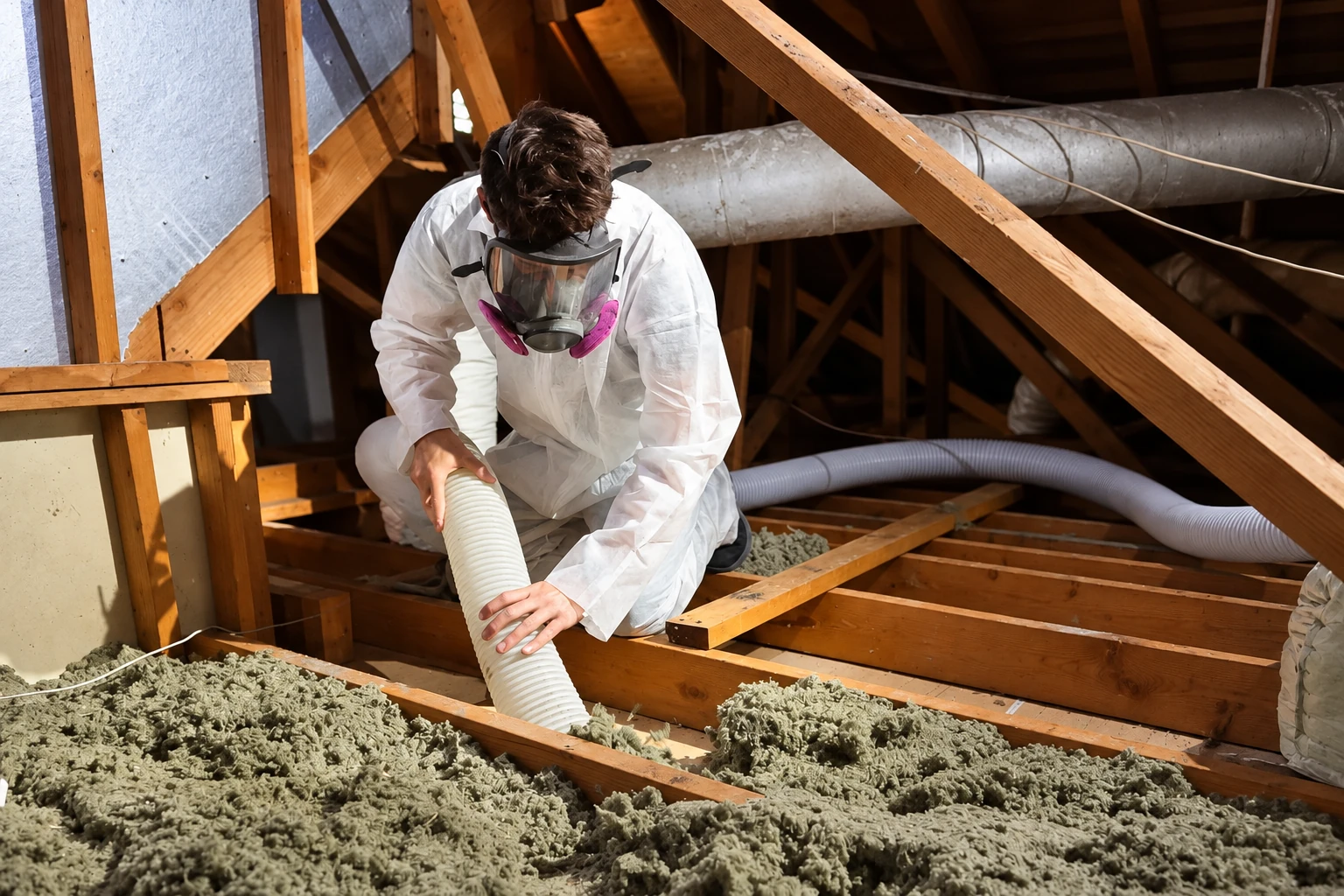
This suits most attics we see. We close the gaps, then top up what's there with blown-in insulation, loose fill blown through a hose, and it usually gives you the most for the money.
Spray foam where ducts run
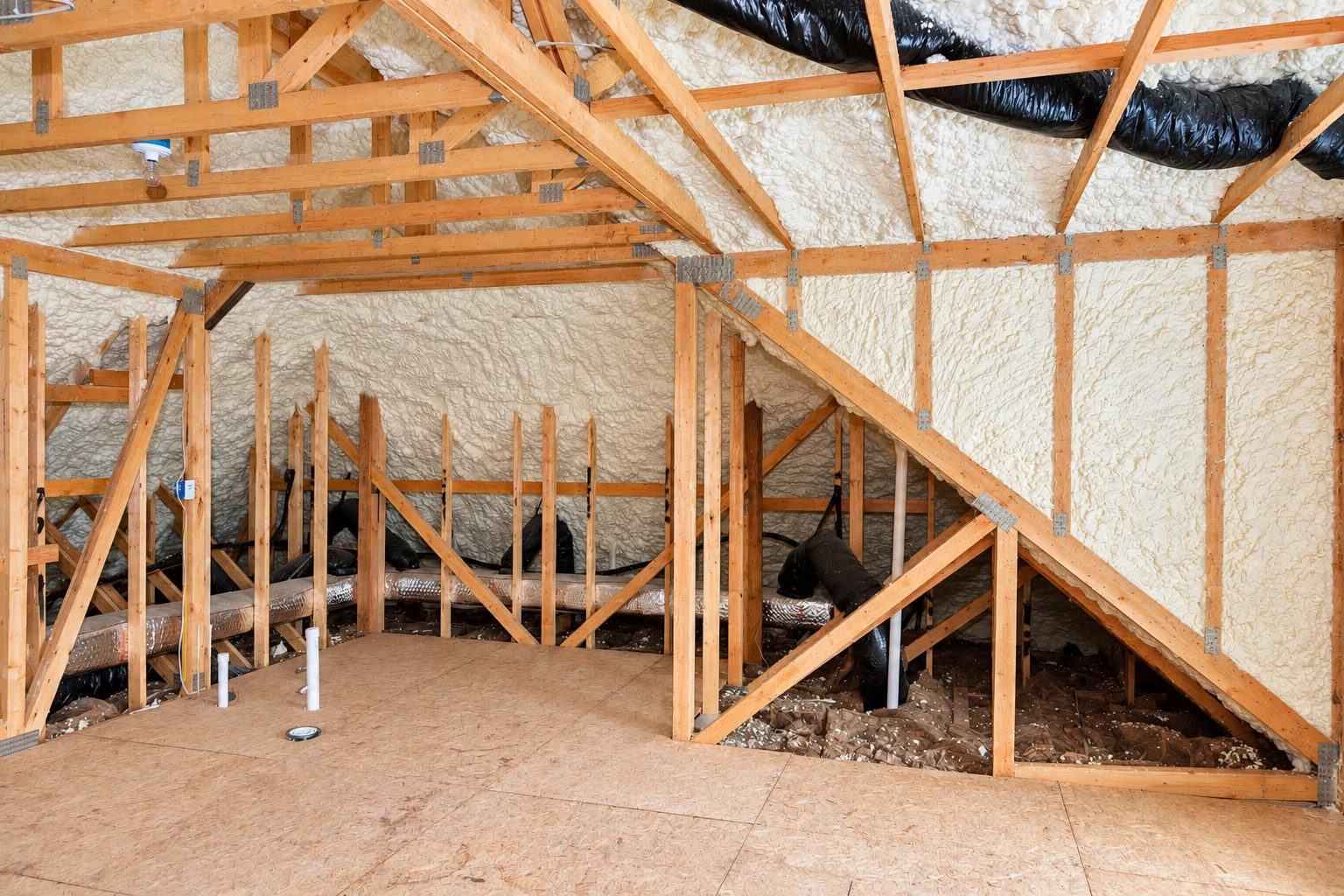
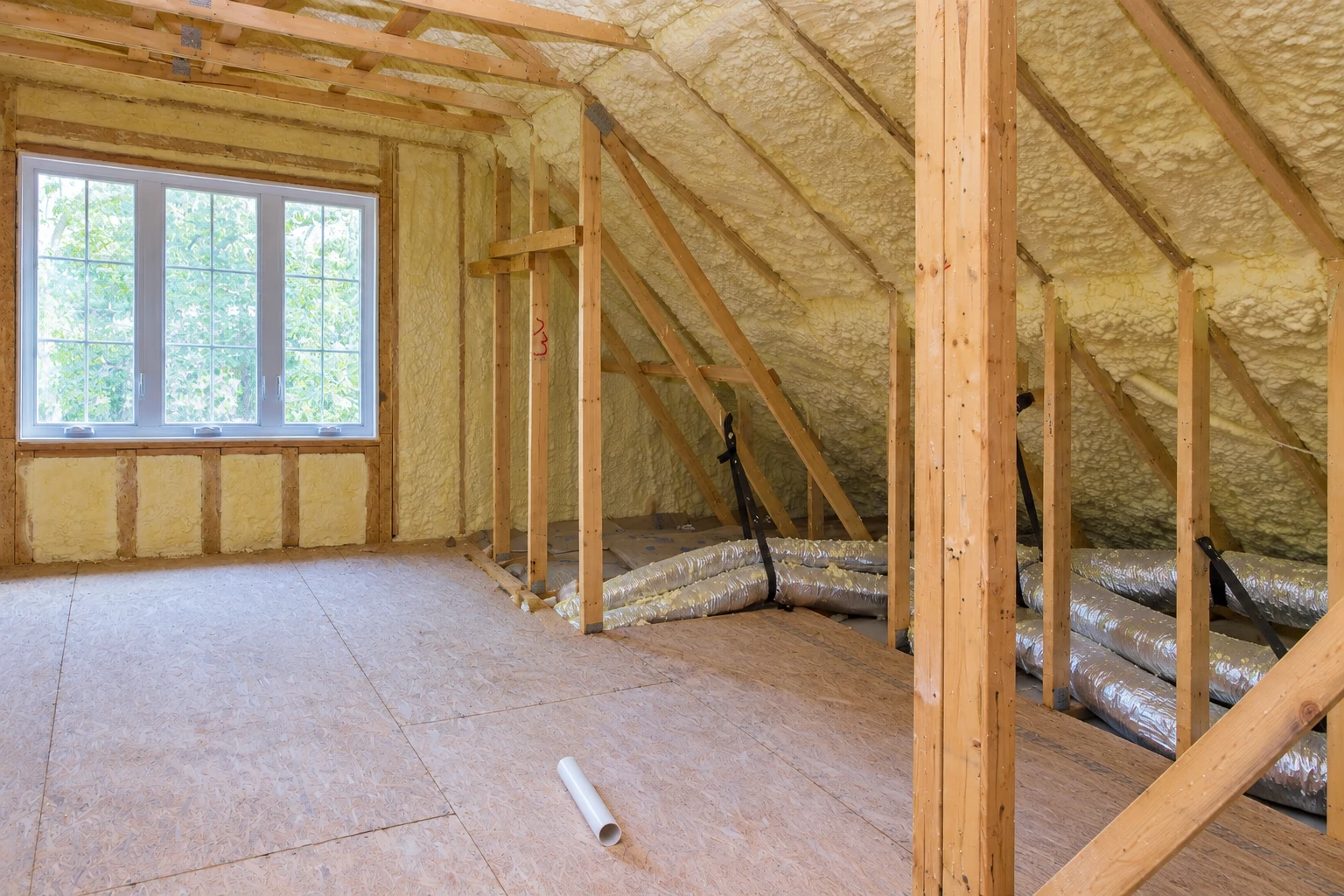
Foam costs more, but it seals air while it insulates. I lean toward it when your ductwork lives in the attic, because that's where doing both jobs in one pass earns its price.
Radiant barrier for a hot attic
A radiant barrier is a reflective layer that's especially useful in hot, sunny climates, where it helps keep the house cooler. It's worth asking about if your upstairs bakes every afternoon.
How do you know your house needs more insulation?
Upstairs runs hot
The bedrooms upstairs are hot by afternoon and stay warm into the night. That usually means the attic is thin or leaking air, and the AC runs longer every day to make up for it.
Cold floors in winter
The floors feel cold underfoot even with the heat on. That usually points to a bare crawl space, and until it's handled you're paying to heat air that slips out under the house.
Drafts near the hatch
You feel air moving around the attic hatch, the outlets or the can lights. Those are open gaps, and as long as they stay open, any insulation on top is fighting a draft.
The room over the garage
One room never feels like the rest of the house, often the one over the garage. Its ceiling and walls usually got less insulation, and the power bill shows it every month.
What happens after you call us about insulating your house?
Call and I come out
Call or send a message, and I come out to look at your attic, crawl space or walls. Then I walk you through what I found and what I'd handle first.
We seal, then insulate
Once you've seen the estimate and want to go ahead, we sort out any permit. Then I work alongside our crew, sealing the gaps before any insulation goes in.
We walk the finished job
When we're done, I walk the finished job with you and show you the depth, the cleared vents and the space around each light. Ask me anything while we're both up there.
Insulation questions we hear most
These are the questions South Gate homeowners ask before an estimate. If yours isn't here, call (213) 329-0381 and ask me about your own house.
How much does home insulation cost in South Gate, CA?
Insulation work in the Los Angeles area usually costs about $1,600 to $5,800 per job, which is what the work runs around here in general, not our price. Where your house falls in that range depends mostly on what I find in the attic and which method you choose, and your estimate gives you the figure for your own house.
What is the best way to insulate an attic, blown-in or batts?
For most attics, blowing in loose fill such as fiberglass, rock wool or cellulose usually costs less than batts, the pre-cut blanket pieces, and covers better. Install prices can vary, so it's fair to ask for a price on each method, and I'm glad to show you both.
Do I need a permit to insulate my house in South Gate?
The city's permit list doesn't settle it for insulation, so check for your address before work starts. South Gate's Building and Safety Division issues permits for home improvement and repair work, and its list names re-roofing but not insulation, so call it at (323) 563-9549 with permit and inspection questions. When a job needs a permit, we pull it and set up the inspections. We're based in South Gate and work the cities around it, including county areas like Walnut Park and Florence-Graham, where we check with the county office instead. State energy rules for your house also follow the climate zone it sits in, and we plan the job around that.
Who can legally insulate my home in California?
In California, insulation work falls under the C-2 Insulation and Acoustical contractor license, which covers installing any insulating material for temperature or sound control. Someone without a license can only take a job under $1,000, and only when the work needs no permit and they have no one working for them on it.
Can insulation go over recessed lights in my ceiling?
Not unless the light is IC rated, a rating that's clearly marked on the fixture, according to one insulation maker's guide. That guide calls recessed lights, fan motors and other heat sources in the ceiling a potential fire hazard and says building and fire codes call for open space around any that aren't rated. Before we fill an attic, I look for that mark on each light, and you're welcome to ask me to show you.
How do I get my house ready for an insulation job?
Get any electrical, plumbing or HVAC work in the attic done first, since one insulation maker's instructions say those trades should finish before blown-in fiberglass goes in. If you're planning new wiring or a fan up there, schedule it ahead of us and clear a path to the attic hatch.
Get a free estimate for your house
Tell us how you get into your attic, whether you have can lights and any wiring or HVAC work you're planning. We reply within one business day to set up your free on-site estimate, with no obligation.
Insulation work up close
Other work your house may need
Crawl space insulation
If the floors stay cold all winter, insulating under the house goes after the problem from below.
Learn moreInsulation removal
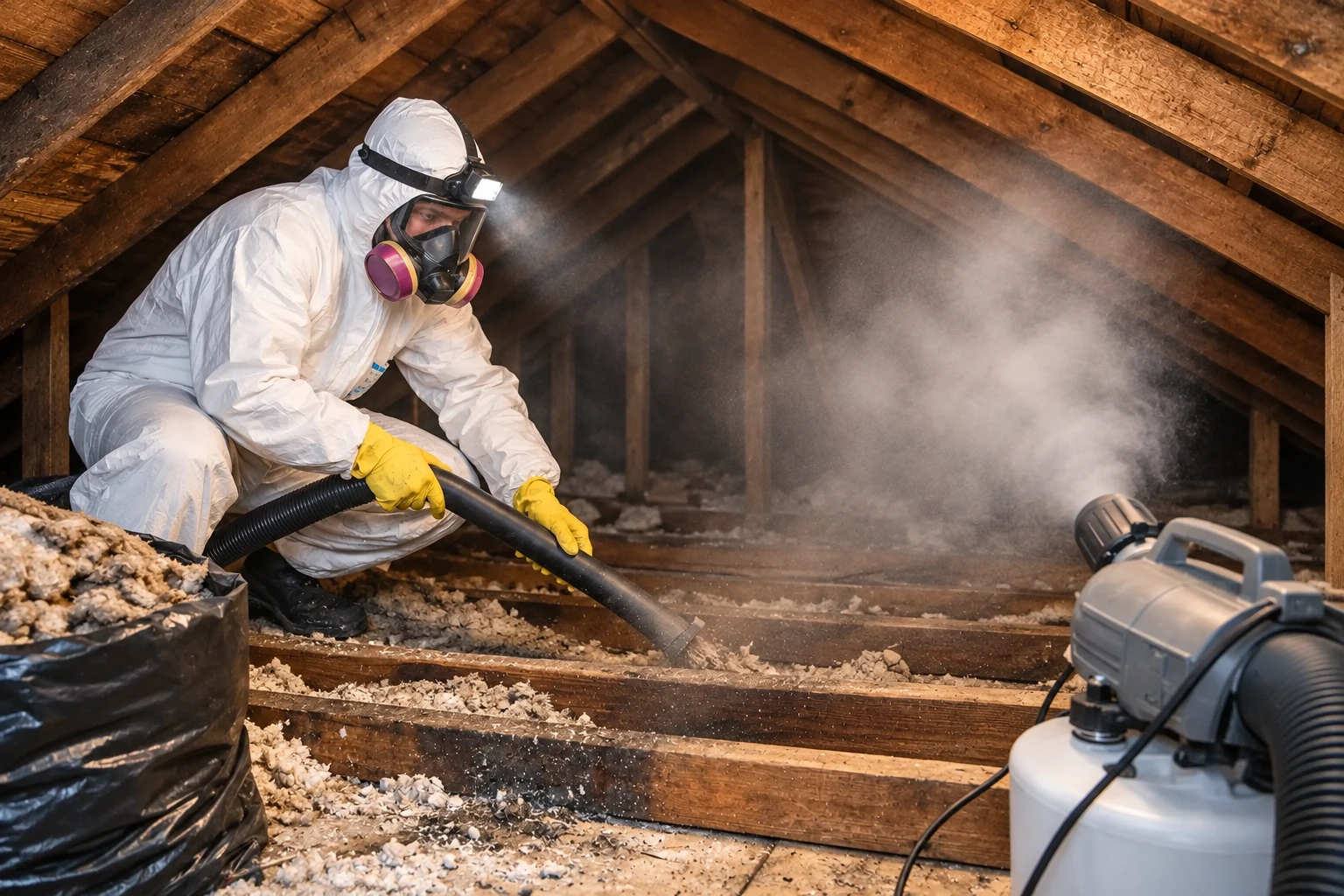
When what's in the attic now can't stay, this clears it out so the new insulation starts clean.
Learn more